How Rubio Tried to Bring a Pro-Russia Peace Plan to Middle Ground
While President Trump attacked the Ukrainians, Secretary of State Marco Rubio flew to Geneva to seize control of negotiations that were going off the rails.
Secretary of State Marco Rubio held a series of meetings in Geneva over the weekend about a 28-point peace proposal for Ukraine and Russia.Credit...Fabrice Coffrini/Agence France-Presse — Getty Images
By
David E. SangerZolan Kanno-Youngs and
Edward Wong
Reporting from Washington
Nov. 24, 2025
Last week, President Trump set a hard deadline for Ukraine’s president, Volodymyr Zelensky, to agree to the details of a 28-point draft peace deal with Russia. If he refused, Mr. Trump said, the Ukrainian leader would be left “
to fight his little heart out.”
By Monday, that deadline, Thanksgiving Day, was gone. The 28-point plan, which was widely criticized as a series of one-sided concessions to President Vladimir V. Putin of Russia, had been shrunk to closer to 20 points.
Some of the most sensitive elements, including limits on the size of the Ukrainian military and a proposed ban on basing NATO troops inside Ukraine, were set aside for future negotiation. So was the question of where the new boundaries between Russia and Ukraine would be drawn.
But the price of the changes, made during a series of meetings over 11 hours in Geneva led by Secretary of State Marco Rubio, is clear. Mr. Putin, some Trump administration officials predict, is likely to dismiss the new draft out of hand, which would lead to a long and drawn-out negotiation — just what Mr. Trump was trying to short-circuit.
As Mr. Rubio said when he was leaving Geneva on Sunday, “Well, obviously the Russians get a vote here, right?”
They do, of course, and whether this latest effort amounts to anything may hinge on the Russian reaction.
As the weekend played out, there were reminders everywhere that the players view the negotiation through entirely different lenses. To some in the Trump administration, it is about finding middle ground by writing out each side’s demands, then making hard compromises. To Mr. Putin, it is about restoring lands that have deep cultural, political and military import to Russia and, by his account, have for more than a millennium.
And for the Ukrainians and the Europeans, it is about demonstrating that nations that seize land by force are not ultimately rewarded for their aggression — and deterring Russia from attempting another invasion.
This account of how the U.S. peace plan touched off a firestorm in the United States and Europe is based on interviews with a half-dozen officials, most of whom spoke on the condition of anonymity to discuss private conversations.
Editors’ Picks
5 Questions to Ask Your Elders Over the Holidays
The Grand Ole Opry at 100
Your Guide to the 2025 Super Mega Crossword
By any measure, the administration’s rollout of the new plan was maladroit at best. The White House was taken by surprise by the leak of its details, first described by
Axios. Mr. Rubio downplayed the proposal last Wednesday as “
a list of potential ideas,” while Mr. Trump, Vice President JD Vance and Karoline Leavitt, the White House press secretary,
embraced it.
Sign up for Your Places: Global Update. All the latest news for any part of the world you select. Get it sent to your inbox.
The leak left the European allies angry about being left out, yet again. Ukrainians who had been courting Mr. Trump, hoping to stabilize the relationship with Washington and re-establish a pipeline of American-made, European-purchased weapons, were angry; Mr. Zelensky said the country might have to choose between its “dignity” and its most powerful ally.
Mr. Trump attacked the Ukrainians on social media on Sunday, the same day Mr. Rubio was trying to win them over by amending the agreement.
Now, after a weekend of emergency interventions, an amended plan seems to be coming a bit more into focus, even if its ultimate success seems like a stretch.
On Monday, Ms. Leavitt insisted that after Mr. Rubio’s negotiations in Geneva, “we feel as if we’re in a very good place.” But she acknowledged that the deal would need to be approved by Mr. Putin and his representatives — and she made no predictions about how that would go.
Mr. Zelensky
said on social media that many of the “right elements” were now accounted for in the framework, and that he would discuss “the sensitive issues” with Mr. Trump.
Administration officials say the impetus for the new negotiations grew from Mr. Trump’s increasing frustration about his inability to end a nearly four-year-long war.
Shortly after the Gaza cease-fire deal in September, Mr. Trump held a meeting with Mr. Rubio, along with Mr. Vance; Steve Witkoff, the president’s special envoy for just about everything; and Jared Kushner, Mr. Trump’s son-in-law, who has no formal role in the U.S. government but whom the president relies on for complex negotiations.
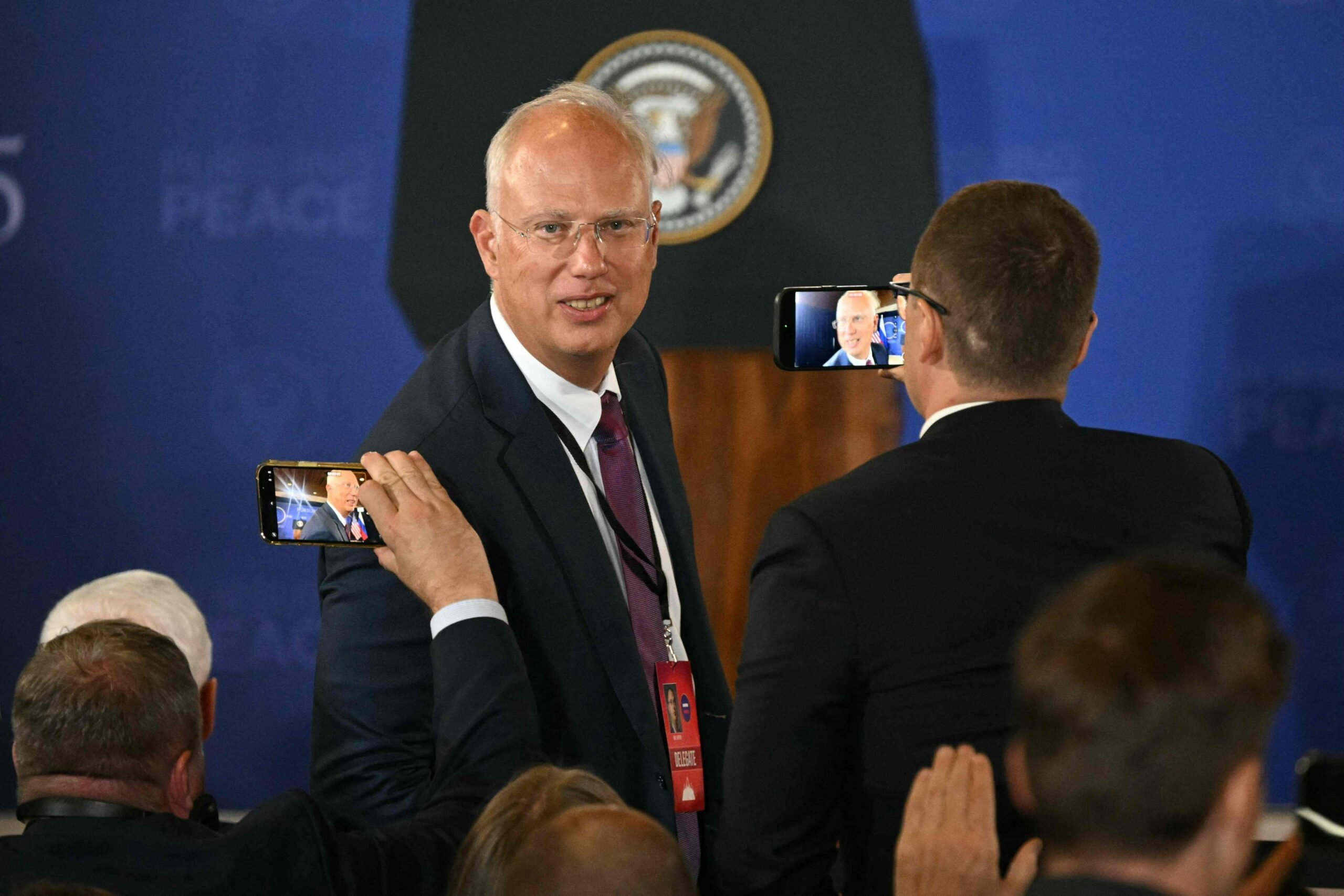
Mr. Trump told the men that they should seek to build on their accomplishment in the Middle East with a deal for Ukraine and Russia. That led to secret meetings in Miami with Kirill Dmitriev, Mr. Putin’s Harvard-trained economic envoy and the head of Russia’s sovereign wealth fund. That meeting was followed by a quiet visit from Rustem Umerov, Mr. Zelensky’s national security adviser.
People familiar with those meetings said Mr. Trump’s aides believed that the combination of Ukraine’s unfolding
corruption scandal and Russia’s incremental battlefield gains put new pressure on Mr. Zelensky to cut a deal. But the one they ultimately drafted contained a lot more input from the Russians than from the Ukrainians.
“We began almost three weeks ago with a foundational document that we socialized and ran by both sides, and with input from both sides,” Mr. Rubio told reporters in Geneva.
And then, naturally, it leaked. The specifics outraged the Europeans, who had been kept in the dark even though they are funding Ukraine’s arms and designing a security guarantee for the country. Chancellor Friedrich Merz of Germany had a tense phone call with Mr. Trump on Friday night, emphasizing that the proposed agreement lacked any enforceable way of deterring the Russians.
“If Ukraine loses this war and possibly collapses, it will have an impact on European politics as a whole, on the entire European continent,” Mr. Merz said after the Group of 20 summit in Johannesburg, which Mr. Trump and other American officials boycotted.
Republican leaders were equally blistering about the leaked proposal, including Senator Mitch McConnell of Kentucky, the former majority leader, who said in a statement that “Putin has spent the entire year trying to play President Trump for a fool.”
In Kyiv, the secretary of the U.S. Army,
Daniel P. Driscoll, a friend of Mr. Vance’s, presented the proposal to skeptical Ukrainian officials. Mr. Vance, who berated Mr. Zelensky in February in the Oval Office and has pushed hard for withdrawing U.S. aid from Ukraine, spoke with Ukraine’s leader by phone on Friday about the proposal.
By Saturday, Mr. Rubio was in damage-control mode. He headed to Geneva to meet with Ukrainian and European officials. Mr. Witkoff, Mr. Kushner and Mr. Driscoll
also flew there.
While Mr. Trump had embraced the proposed deal as the near-final word, Mr. Rubio was talking about it as an opening gambit.
From his plane to Switzerland, he called Senator Mike Rounds, Republican of South Dakota, and Jeanne Shaheen, Democrat of New Hampshire, who were leading a bipartisan delegation to a security conference in Halifax, Nova Scotia, and talked at length about the origins of the 28-point proposal.
The senators then held a news conference, and told reporters that they heard Mr. Rubio describe the document as one largely composed by the Russians, rather than as an American creation. “It is not our recommendation,” Mr. Rounds paraphrased Mr. Rubio as saying. “It is not our peace plan.”
Mr. Rounds said Mr. Rubio had “made it clear that it was an opportunity to have received” the plan. “You now have one side being presented, and the opportunity for the other side to respond,” Mr. Rounds said.
When their comments were reported, it seemed like confirmation that the Russians had played a major role in composing the language. Suddenly, Mr. Rubio found himself denying that he had ever told the senator that the document was essentially a Russian draft. He called back to Mr. Rounds, and others, insisting that they had misinterpreted his remarks.
But he soon confirmed that the drafting began with a weighing of Russian demands.
“We began from the early stage of this process with our understanding of the Russian position as had been communicated to us in numerous ways,” he said in Geneva on Sunday. He said that included verbal and informal written proposals sent to the State Department that are called “nonpapers.” He insisted the same was done with the Ukrainians, though it is unclear when that happened.
By Sunday night Mr. Rubio appeared to have wrestled back control of the negotiations.
He excised — for now — sections that would forever bar Ukraine from joining NATO and that banned NATO member states from forming a security force inside Ukraine that would deter Russia from launching a new invasion.
A White House official added that a previous provision requiring Ukraine to cede territory to Russia had been revised. But now comes the hard part: Those are exactly the provisions that Mr. Putin cares about most.
Russia experts have assessed that there are no signs yet that Mr. Putin is ready to end the full-scale invasion of Ukraine he started in February 2022, or that he would abide by a permanent cease-fire. Mr. Putin has rejected every immediate cease-fire proposal offered by Mr. Trump this year.
The fighting, meanwhile, has continued. Early Tuesday, loud explosions were heard across Ukraine’s capital early, with the local authorities saying air defenses were firing to fend off a large Russian attack.






 Edit: sen sijaan tässä on hyvää tutkivaa kannaottoa ja sen uutisointia:


