Kertoohan sekin ryssän kyvykkyydestä, että edes Mossea (nykyinen malli on Moskvitsh 3) ei enää osata itse tehdä, vaan sekin on kiinalaisten luomus JAC autotehtaalta. Suuren ja mahtavan aikoihin Lada oli se neuvostokansalaisten hienompi menopeli ja Mosse hieman vaatimattomampi kulkuväline.Armatan osalta voidaan mennä jo High risk, low reward menetelmällä. Hienoja puheita, komeita esitteitä, keisari ilman vaatteita.
Molempien osalta, niin ei tulla näkemään mitään high techiä, koska suurin osa niistä tärkeistä komponenteista on länsimaista. Tyhmä ryssä ei osaa itse niitä korvata ja kinkki ei niitä ilmaiseksi anna.

Install the app
How to install the app on iOS
Follow along with the video below to see how to install our site as a web app on your home screen.
Note: This feature may not be available in some browsers.
You are using an out of date browser. It may not display this or other websites correctly.
You should upgrade or use an alternative browser.
You should upgrade or use an alternative browser.
Panssarivaunut
- Viestiketjun aloittaja ctg
- Aloitus PVM
-
- Tagit
- panssarivaunut

tankki-tapsa
Kenraali
No mossen juuret ovat ennen sotia olevan Opelin mallissa, Ihan tuotantolinjaa myöten. Uudemman mallin moottori oli BMW kopio vaikka kori olikin ihastuttavaa neuvostomuotoilua. Lada taas oli suoraan Fiat 124, Samaran tekniikan oli suunnitellut Porsche ja korinkin muistaaksen italialaiset. Että se siitä kyvystä.Kertoohan sekin ryssän kyvykkyydestä, että edes Mossea (nykyinen malli on Moskvitsh 3) ei enää osata itse tehdä, vaan sekin on kiinalaisten luomus JAC autotehtaalta. Suuren ja mahtavan aikoihin Lada oli se neuvostokansalaisten hienompi menopeli ja Mosse hieman vaatimattomampi kulkuväline.
Tässäkin valossa Kiinan kyky tuottaa asioita on mykistävä.

Nostradamuksen ennuteet pitää ottaa vakavasti, Keltainen kansa valtaa mailman ja ennenkuin kaikki halukkaaat maat pääsee yhteen se yhteisö hajoaa (EU?)Tässäkin valossa Kiinan kyky tuottaa asioita on mykistävä
D
Deleted member 9090
Guest
Objekti 490A eli Armatan esi-isä.
Keltainen voisi olla myös maksavikainen venäläinen pultsari?Nostradamuksen ennuteet pitää ottaa vakavasti, Keltainen kansa valtaa mailman ja ennenkuin kaikki halukkaaat maat pääsee yhteen se yhteisö hajoaa (EU?)

John Hilly
Respected Leader
35 mm konetykin nopeus 1 000 laukausta minuutissa – Ukraina saa vanhoista Leopard 1 -tankeista Venäjän rahoilla viriteltyjä tuhokoneita
Vanha alusta integroitiin uuteen asejärjestelmään.
John Hilly
Respected Leader
Abrams-taistelupanssarivaunu uudistuu radikaalisti – Tällainen siitä tulee
Abrams-tankin ensimmäiset uudet prototyypit ovat maavoimien testattavana jo ensi vuoden aikana.
Tuolla on vähän lisätietoa aiheesta:
Abrams-taistelupanssarivaunu uudistuu radikaalisti – Tällainen siitä tulee
Abrams-tankin ensimmäiset uudet prototyypit ovat maavoimien testattavana jo ensi vuoden aikana.www.tekniikkatalous.fi

M1E3 Abrams Next-Gen Tank "Pre-Prototype" To Be Delivered By End Of Year
The Army wants a platoon of prototypes very quickly to prove out its lighter-weigh hybrid-electric Abrams tank concept.
 www.twz.com
Vaihteiston toimittajaksi mainitaan Sapa. Tuolla on speksejä tuotteesta.
Kerrotaan olevan vaatimattomat 32 vaihdetta eteen ja taakse, ei momentinmuunninta hukkaamassa tehoa -> yli 90% hyötysuhde ja rinnakkaishybridioptio. Massan kerrotaan olevan 1995 kg joka on vähemmän kuin RENK HSWL 295TM:n 2400 kg.
Dieselmoottorin toimittaja on Caterpillar. Tällä on sopivan tehoisia malleja, mutta mikä lienee riittävän kompakti ja kevyt? Esim C32 on merkittävästi painavampi ja suurempi joka suuntaan kuin MTU MT883. Joka tapauksessa joku Caterpillarin olemassaoleva tuote tuohon annetaan ymmärtää olevan tulossa.

viimeinen mohikaani
Kenraali
32 vaihdetta on ihan jäätävä määrä. Olisiko tuossa 8-vaihteinen loota, missä aluevalitsin (x2) ja suunnanvaihtaja (x2), eli yhteensä 16 vaihdetta eteen ja 16 vaihdetta taakse?Tuolla on vähän lisätietoa aiheesta:
M1E3 Abrams Next-Gen Tank "Pre-Prototype" To Be Delivered By End Of Year
The Army wants a platoon of prototypes very quickly to prove out its lighter-weigh hybrid-electric Abrams tank concept.
Vaihteiston toimittajaksi mainitaan Sapa. Tuolla on speksejä tuotteesta.
Kerrotaan olevan vaatimattomat 32 vaihdetta eteen ja taakse, ei momentinmuunninta hukkaamassa tehoa -> yli 90% hyötysuhde ja rinnakkaishybridioptio. Massan kerrotaan olevan 1995 kg joka on vähemmän kuin RENK HSWL 295TM:n 2400 kg.
Dieselmoottorin toimittaja on Caterpillar. Tällä on sopivan tehoisia malleja, mutta mikä lienee riittävän kompakti ja kevyt? Esim C32 on merkittävästi painavampi ja suurempi joka suuntaan kuin MTU MT883. Joka tapauksessa joku Caterpillarin olemassaoleva tuote tuohon annetaan ymmärtää olevan tulossa.

Hanski
Respected Leader
Kuulostaisi kyllä uskottavalta!32 vaihdetta on ihan jäätävä määrä. Olisiko tuossa 8-vaihteinen loota, missä aluevalitsin (x2) ja suunnanvaihtaja (x2), eli yhteensä 16 vaihdetta eteen ja 16 vaihdetta taakse?
Kyllä niitä vaihteita taitaa olla 32 kpl molempiin suuntiin. Tämän:32 vaihdetta on ihan jäätävä määrä. Olisiko tuossa 8-vaihteinen loota, missä aluevalitsin (x2) ja suunnanvaihtaja (x2), eli yhteensä 16 vaihdetta eteen ja 16 vaihdetta taakse?
mukaan vaihteistossa on modulit A, B ja C joista A:ssa on suunnanvaihdin, B:ssä ohjaustoiminto ja C:ssä välityssuhteet.
"Module C provides 32 mechanical speed
ratios for efficient vehicle propulsion. This
high number of ratios is provided through a
simple series of five planetary gear sets
selected by electronically modulated
clutches. Together with Module A, all 32
ratios are available in forward and reverse
vehicle motion."
Jos yhdessä planeettavaihteessa on kaksi välityssuhdetta, viidestä peräkkäisestä saadaan: 2^5 = 32 kombinaatiota.
Myös kääntökoneisto on toteutettu jotenkin eri tavalla. Siinä ei ole käytetty hydraulista (vaan mekaanista) tehon välitystä jolloin hyötysuhteen kehutaan olevan merkittävästi parempi kuin aikaisemmissa ratkaisuissa.
Pyöräajoneuvoille on myös tarjolla 16 ja 24 pykäläiset vaihteistot samalla tyylillä toteutettuna.

MOBILITY SYSTEMS FOR WHEEL VEHICLES - SAPA Transmission
About SAPA Transmission Close About SAPA Transmission Open About SAPA Transmission About SAPA Transmission History Products & Services Close Products & Services Open Products & Services Products & Services Mobility systems Mobility systems […]
 sapatransmission.com


-TripleX-
Respected Leader
Tanska lisää 44 vaunua aikaisempaan CV90 tilaukseensa.

 defence-industry.eu
Denmark expands CV90 fleet with order for 44 more vehicles under new BAE Systems contract
BAE Systems has received a contract to deliver 44 additional CV90 Infantry Fighting Vehicles to Denmark, building on a previous 2024 order for 115 vehicles.
defence-industry.eu

Panssari Salama
Respected Leader
159 siis yhteensä, mekanisoitu prikaati varustaen. Toivottavasti tuossa luku mitä PV tilaamassa: 160 vaunua, ja vanhat MLU-ceeveet bemareiden tilalle.
Mihin vanhat CV9030 vaunut riittää? Prikaatiin liian vähän, kahteen tst-osastoon kyllä.159 siis yhteensä, mekanisoitu prikaati varustaen. Toivottavasti tuossa luku mitä PV tilaamassa: 160 vaunua, ja vanhat MLU-ceeveet bemareiden tilalle.
Panssari Salama
Respected Leader
1:1 korvaamiseen? Ceeveitä taitaa olla muutama vähemmän, mutta mahtuiko niihin yksi jantteri enemmän.Mihin vanhat CV9030 vaunut riittää? Prikaatiin liian vähän, kahteen tst-osastoon kyllä.
Eikös BMP-2 ole tst-osastojen kalustoo? Kysymys onkin säilyvätkö tst-osastot tulevaisuudessa, vai muodostetaanko niistä toinen mekanisoitu prikaati, jota täydennetään uusilla vaunuilla.1:1 korvaamiseen? Ceeveitä taitaa olla muutama vähemmän, mutta mahtuiko niihin yksi jantteri enemmän.
Kun on puhuttu IFV vaunujen määrän selvästä kasvusta, se vois viitata toiseen prikaatiin.

Onko tämä T-95 vuosien takaa jo käsitelty täällä? Uutta tietoa konseptista ilmennyt.
Leaked blueprints reveal Russia’s T-95 monster tank
By
Dylan Malyasov
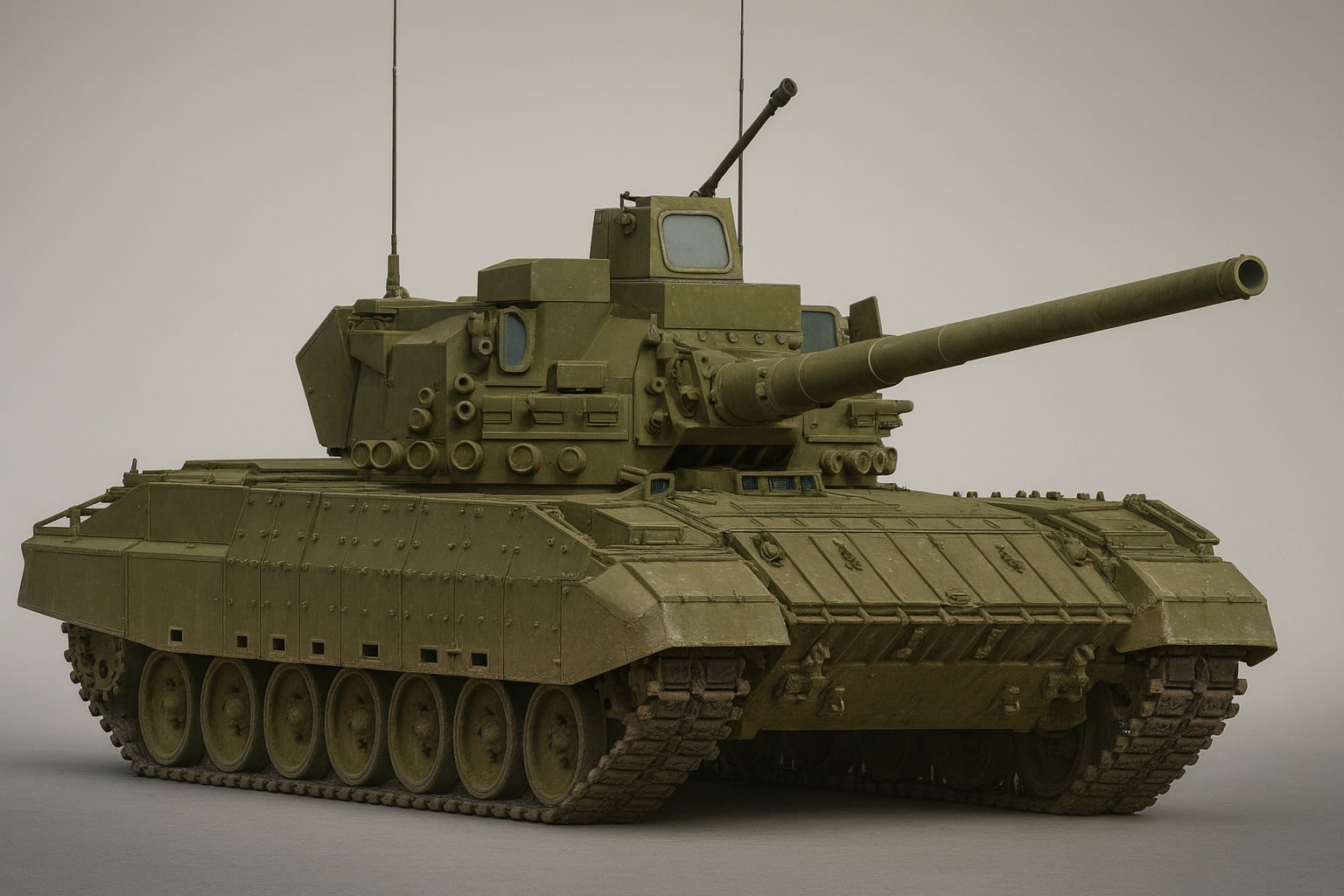
Leaked blueprints reveal Russia’s T-95 monster tank
Detailed 3D renders of Russia’s long-abandoned experimental T-95 main battle tank project—also known as “Object 195”—have surfaced online, offering an unprecedented look at the advanced design once pursued by the Russian military-industrial complex. The renders were created by 3D artistdefence-blog.com
Dec 8, 2025
3D render of T-95 by Gustiiz3D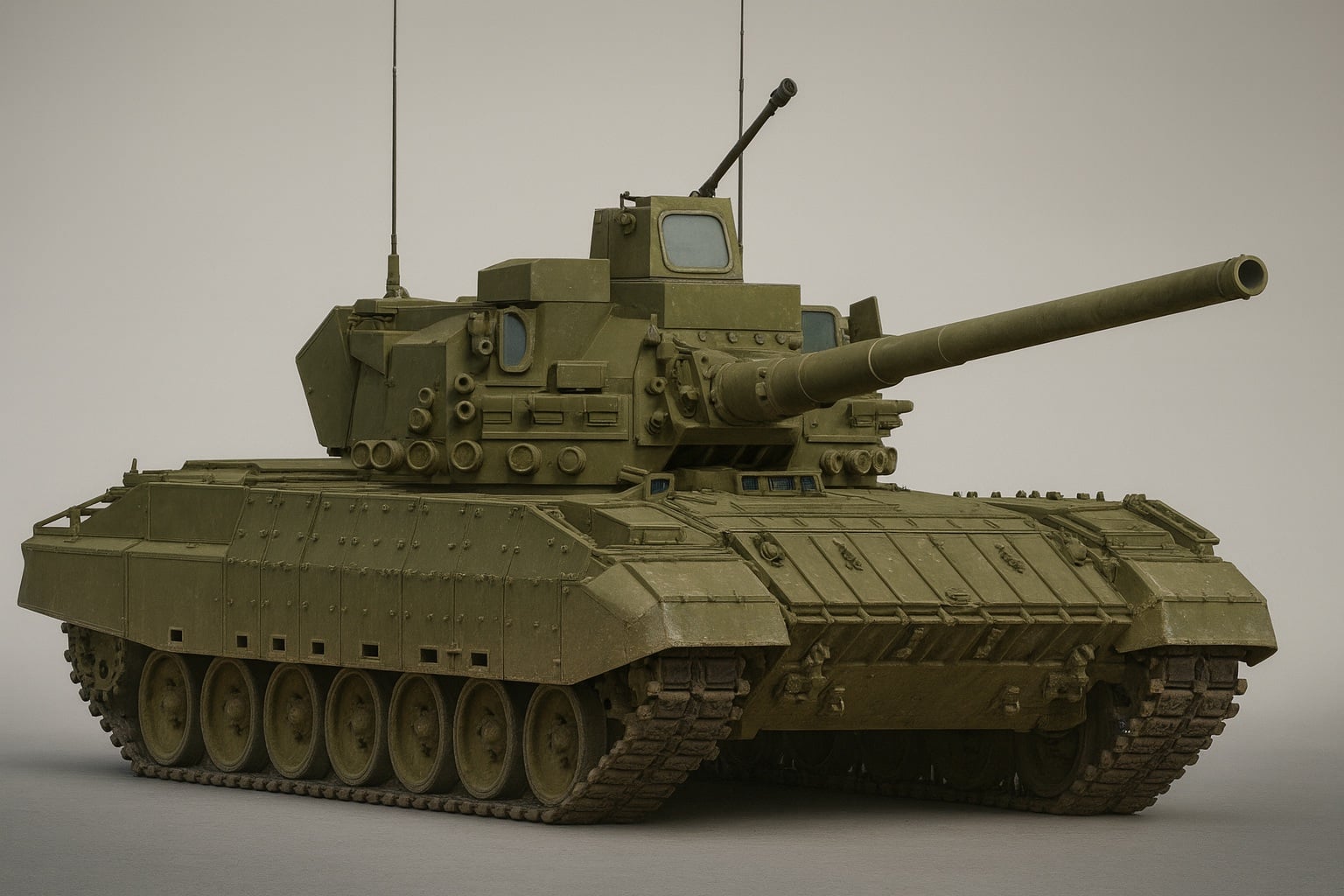
Detailed 3D renders of Russia’s long-abandoned experimental T-95 main battle tank project—also known as “Object 195”—have surfaced online, offering an unprecedented look at the advanced design once pursued by the Russian military-industrial complex.
The renders were created by 3D artist Gustiiz3D using an original set of technical blueprints that recently appeared on Western platforms. According to the artist, “these renders were produced based on an authentic album of schematics that recently leaked online.”
The T-95, a 58-ton prototype described as a tank built to “extreme parameters,” was reportedly equipped with a 152mm main gun and an additional 30mm cannon. The vehicle was designed to accommodate a crew of up to three personnel, seated in an isolated armored capsule located in the forward section of the hull. This layout physically separated the crew from both the fuel tanks and ammunition storage areas—an arrangement aimed at improving survivability.
Russian defense commentators had long speculated about the configuration and survivability features of the T-95, and these newly released renders now provide visual confirmation of several unique design aspects.
According to the source material, the T-95 was intended to include advanced multilayer composite armor along with the “Drozd-2” active protection system and “Relikt,” a next-generation explosive reactive armor (ERA) package. These combined systems suggest that the tank was being developed to counter modern anti-tank threats on both conventional and asymmetric battlefields.
3D render of T-95 by Gustiiz3D
However, the T-95 project was officially canceled in 2008 by the Russian Ministry of Defense. As noted by open-source defense observers, Moscow’s decision to terminate Object 195 reflected both the high cost and the complexity of the platform’s development.
In a follow-on attempt, the Russian defense sector shifted focus to a more simplified and allegedly cost-effective platform known as the T-14 “Armata,” developed under the Object 148 program. Yet even this effort appears to have encountered persistent setbacks. Despite more than a decade of promotional campaigns, limited production, and sporadic appearances at parades and expos, the T-14 remains absent from full-scale combat operations.
Russian sources suggest that like its predecessor, the Armata project has become stalled due to unresolved technical issues, funding constraints, and logistical incompatibilities with existing Russian Army support infrastructure.


kimmo.j
Greatest Leader
Väittämättä että tiedän totuuden, uskon kuitenkin, että kyseessä on taas yksi konsepti/protovaunu monien muiden joukossa.Onko tämä T-95 vuosien takaa jo käsitelty täällä? Uutta tietoa konseptista ilmennyt.
Telokoneistosta arvaan mistä vaunu on saanut dna:nsa.
Vai muodostetaanko nykymuotoisten prikaatien sijaan taisteluosastoja? Aika näyttää.Eikös BMP-2 ole tst-osastojen kalustoo? Kysymys onkin säilyvätkö tst-osastot tulevaisuudessa, vai muodostetaanko niistä toinen mekanisoitu prikaati, jota täydennetään uusilla vaunuilla.
Kun on puhuttu IFV vaunujen määrän selvästä kasvusta, se vois viitata toiseen prikaatiin.